


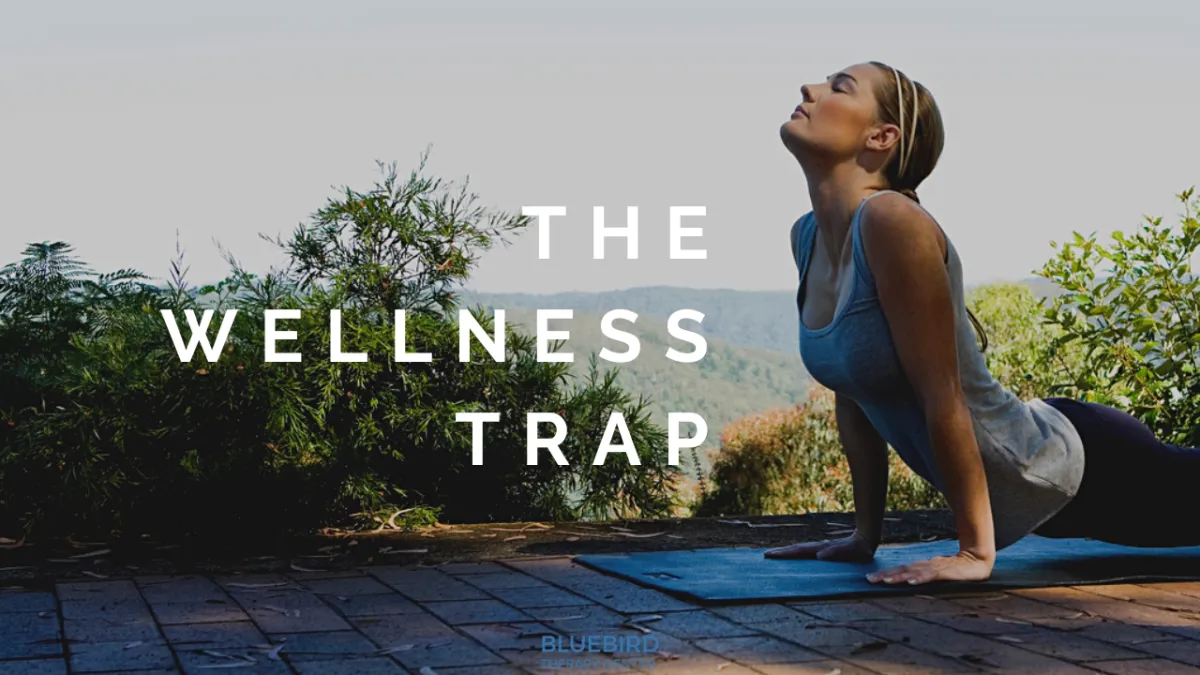
When Doing Everything Right Still Feels Wrong
You Are Doing Everything Right and Still Feel Terrible. Here Is Why.
(Details and names, have been changed and combined from patterns we see across many clients, research, and circumstances.
It is a portrait of an experience that quietly affects many people.)
Meet Rachel.
Rachel is in her late forties. On paper her life looks exactly like the kind you might quietly envy. She is married. She has a home in a nice area. She has a fitness routine most people would call impressive. She meal preps. She takes her supplements. She has a morning routine that includes journaling, lemon water, and a gratitude list. She listens to wellness podcasts on her commute. She has read the books. She goes to therapy occasionally but only when things feel really bad.
And she is completely, quietly, exhaustingly miserable.
She would not describe it that way to anyone. If you asked her how she was, she would say fine. Busy. tired. She would smile. She would ask you about your kids and remember details about your life you did not know she was tracking. She would be curious, engaged, involved. She would defend her marriage fiercely if anyone even gently probed whether her husband, who has his own patterns she does not fully acknowledge, is contributing to how she feels. She would explain to you, without you asking, why her life is actually good and she is just having a hard week.
But when she is alone, she is on Instagram tracking her sister's new kitchen renovation. She is quietly comparing her body to the woman a few doors down who somehow always looks put together. She is checking out the mom from her kids' old school who seems to travel constantly. She feels a low pull of jealousy that never fully resolves, aimed outward at every acquaintance whose life looks like the version of hers she thought she would have by now. She grew up in a household where love felt conditional and vigilance felt necessary, and even though she does not talk about it, that pattern lives inside her every day. She hates when people ask her too many questions. She asks everyone else a lot of them.
Rachel is doing everything the internet and the books told her to do to feel better. Meditating. Cold plunges. Green juice. Breathwork. Sleep tracking. Weightlifting. Reading self-help. Attending retreats. And she still, quietly, feels worse every year.
At Bluebird Therapy Center in New Jersey, we see versions of Rachel often.
Sometimes wellness itself becomes the problem.
When Self-Improvement Becomes Another Way to Fail
There is a specific and growing mental health experience that we are seeing more and more of. It looks like this.
A person who is high functioning, self-aware, and doing the work becomes convinced that if they just optimize a little more, they will finally feel okay. They add a habit. Then another. Then another. They read another book. They try another modality. another Youtube video or self help influencer. They tweak their morning routine, their sleep routine, their diet, their supplements. Each addition promises a shift in how they feel that never quite arrives.
At first the pursuit feels empowering. Then it starts to feel like a job. And eventually it becomes something worse. It becomes a way to fail every single day.
When you build your sense of wellbeing around a checklist, missing one item on the checklist feels like a personal moral failure. Miss a workout and you spiral. Sleep badly one night and the whole day feels ruined. Have a difficult moment and immediately criticize yourself for not being further along in your growth journey.
The tools that were supposed to bring peace start creating pressure. And the person who was already anxious now has one more source of anxiety to manage.
The Comparison Layer
The more you optimize, the more you look around. You look at the neighbor whose kids seem happier than yours. The sister who somehow finished her renovation and looks well rested. The woman from your Pilates class whose Instagram is a highlight reel of vacations you have not taken. You compare quietly. You would never admit it. But it is running in the background of every wellness practice you have built, and it is exhausting.
Comparison and wellness culture feed each other. The more time you spend curating your own wellness routine, the more attuned you become to how everyone else appears to be doing theirs better. And because most of what you are comparing yourself to is curated content and glimpses through windows, you are competing against a fiction you cannot actually win.
Rachel is not jealous of her husband. She is jealous of the version of life she thought she would have by now. Every scroll through a neighbor's or sister's page reinforces the story that she is behind, that she is failing, that something is quietly wrong with her. And so she doubles down on the wellness routines. Which makes the comparison worse. And around it goes.
Why This Happens
Wellness culture markets certainty. It promises that if you follow the protocol, you will get the outcome. Real mental health does not work that way. Real life does not work that way. When a person raised on wellness culture hits an emotional wall that no protocol can fix, they do not blame the protocol. They blame themselves for not doing it right.
Optimization becomes control. For people who grew up in unstable or emotionally difficult environments, control feels like safety. Wellness routines can be a way to try to control the uncontrollable, our internal experience, our emotions, other people, the future. It works for a while. Then it stops working. And when it stops working, the response is often to double down rather than to look underneath.
The real work gets avoided. Green juice is easier than a difficult conversation with your partner. A cold plunge is easier than examining why you feel the way you do about your childhood. A meditation app is easier than sitting with grief you have been carrying for decades. Wellness practices are genuine tools, but they can also become sophisticated distractions from the deeper work that would actually change things.
Comparison compounds the problem. Social media makes it look like everyone else is optimizing successfully. So the person who is trying just as hard but still struggling assumes they are the one doing it wrong.
The Difference Between Building a Life and Managing a Symptom
Most wellness routines are designed to manage symptoms. Reduce stress. Improve mood. Regulate energy. All good things. But if the underlying source of the distress goes untouched, you will be managing those symptoms forever.
Therapy is different. Therapy is not another symptom management protocol. Therapy is the space where you get to look at what is actually driving the symptoms. The unresolved patterns from childhood. The relationship dynamics you have been quietly tolerating. The parts of yourself you have been outrunning through optimization. The grief you never fully processed. The anger you were never allowed to feel. The comparison spiral you cannot seem to step out of.
You cannot supplement your way out of that. You cannot cold plunge your way out of it. You cannot journal your way out of it in a way that actually changes anything, because the journaling never quite gets to the thing.
The thing has to be looked at. And it usually has to be looked at with someone.
What Rachel Actually Needs
If Rachel walked into Bluebird tomorrow, we would not tell her to stop meditating. We would not tell her to give up her workouts. Those routines serve real functions. What we would help her do is start looking at the material underneath the routines.
Why does she compare herself to every woman she knows. What is the childhood pattern underneath the constant vigilance. What is she avoiding by being so busy improving herself. What is she defending her marriage against, and who is she really defending. What would it mean to stop performing okay and start actually being okay.
Those are the conversations that change lives. Not another supplement. Not another book. Not another protocol.
The Next Step
If you have been doing all the right things and still feel bad, that is important information. It is telling you that the answer is not more of the same. It is telling you that something underneath deserves attention.
At Bluebird Therapy Center in New Jersey, we work with people who look completely put together on the outside and are quietly struggling on the inside. We work with high functioning anxious clients, people navigating stuck relationships, people carrying childhood patterns they never quite named, and people who are exhausted from trying so hard for so long.
We offer virtual therapy sessions for anyone across New Jersey, accept most major insurance plans, and offer a free 15-minute consultation with no pressure and no commitment required.
Book your free consultation today and start doing the work that wellness alone was never going to do.


