


What Is Gaslighting?
Everyone is getting gaslighted these days. Your coworker is gaslighting you. Your partner is gaslighting you. Your mother, your landlord, your congressman. The word has become so common that it is starting to lose the weight it was always supposed to carry.
That is the problem. Because real gaslighting is a serious form of psychological manipulation that causes genuine harm. And when we use the word carelessly, we do two damaging things at once: we minimize what actual victims experience, and we create false accusations that destroy trust in relationships where none was warranted.
So let us do this properly.
Where the Word Actually Comes From
The term gaslighting did not come from a therapist's office or a psychology textbook. It came from Hollywood.
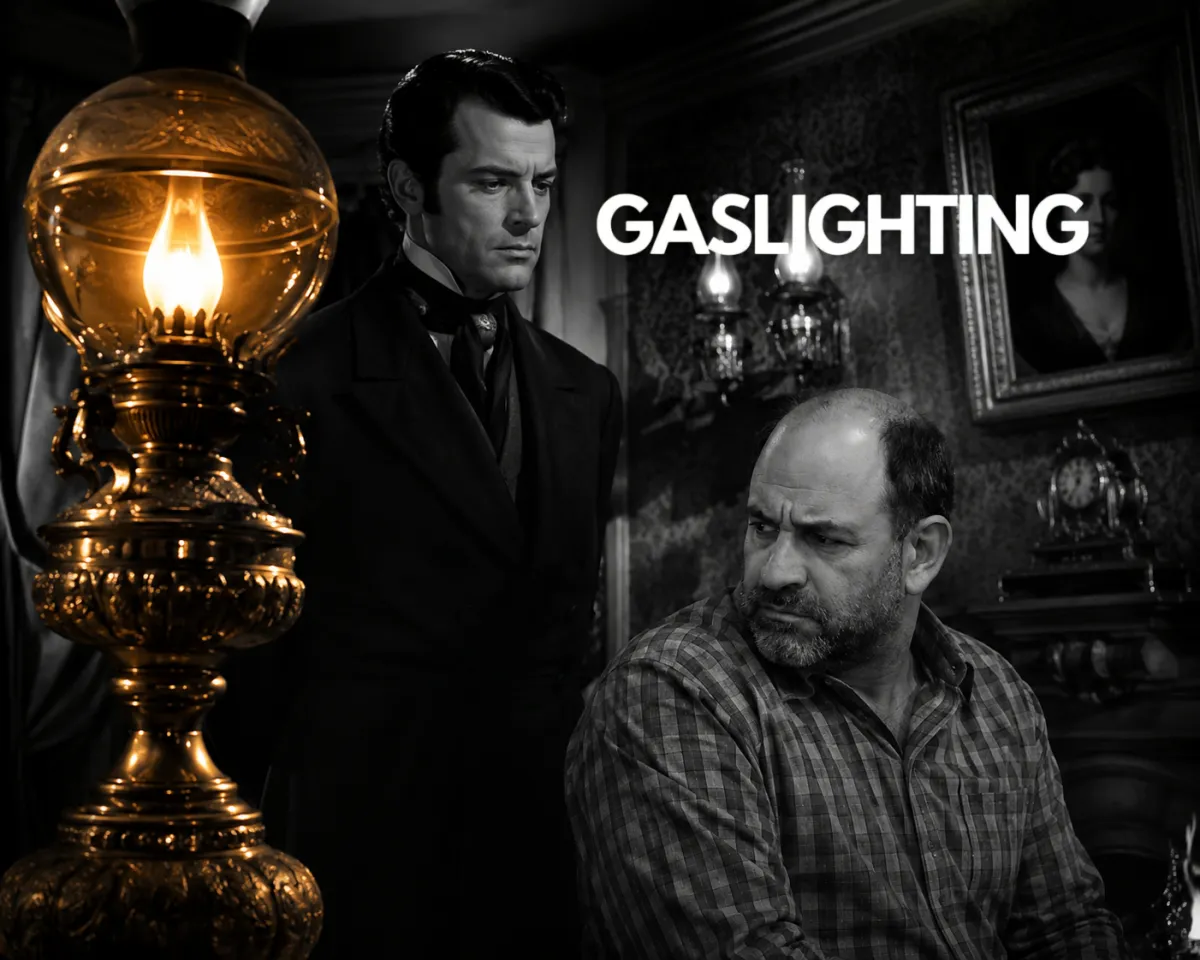
The term originates from the 1944 film Gaslight, directed by George Cukor and starring Ingrid Bergman, which tells the story of a husband's sinister attempts to manipulate his wife into believing she is losing her sanity.
The plot is specific and worth knowing. In the movie, the husband dims the gaslights in their home and then flatly denies any changes when his wife notices, causing her to doubt her own perceptions. He is not just lying to her about isolated facts. He is systematically dismantling her ability to trust her own experience of reality. His goal is to have her declared insane so he can take control of her estate.
Ingrid Bergman's portrayal of the psychologically tormented Paula earned her an Academy Award for Best Actress. One of the most memorable lines in the film, delivered by Joseph Cotten, is this: "You are not going out of your mind. You are slowly and systematically being driven out of your mind." ICADV
The term was named Merriam-Webster's word of the year in 2022, recording a 1,740 percent spike in lookups. It has since become one of the most used and most misused words in modern conversation. The Present Minds
Gaslighting Is Not the Same as Lying
This distinction matters enormously and almost nobody makes it clearly enough.
Lying is telling someone something false. It can be selfish, hurtful, and damaging to trust. But it is a single act. A lie says: "this happened when it did not". Or: "I did not do that" when they did.
Gaslighting is a sustained pattern designed to make someone incapable of trusting their own perception. The goal is not to win an argument. The goal is to make the other person unable to have one.
Gaslighting says:
You did not see what you saw.
You are too sensitive.
You are imagining things.
You are unstable.
You always do this.
Nobody else sees it that way.
You are the problem. NPR
It is not one lie. It is a calculated, ongoing campaign to replace your reality with theirs. The target is not your knowledge of a specific event. The target is your confidence in your own mind.
Do Not Gaslight Yourself Into Thinking You Are Being Gaslighted
This needs to be said plainly because it is one of the most important points in this entire blog.
Not every person who disagrees with you is gaslighting you. Not every partner who remembers an argument differently is gaslighting you. Not every boss who pushes back on your account of a situation is gaslighting you.
Conflict, miscommunication, and genuinely different memories of the same event are normal features of human relationships. They are uncomfortable. They can be frustrating. They are not automatically manipulation.
Some mental health experts have expressed concern that the term has been used too broadly, arguing it has become a buzzword improperly used to describe ordinary disagreements.
When you label every uncomfortable interaction as gaslighting, you risk something important. You stop examining your own role in conflicts. You close the door on accountability. And you erode the meaning of a term that real victims of psychological abuse depend on to describe and validate their experience.
Use the word carefully. Use it accurately. The boy who cried wolf did not get help when the wolf actually arrived.
Signs That It Might Actually Be Gaslighting
With that caution firmly in place, here is what real gaslighting actually looks like over time:
You consistently leave conversations feeling confused about what actually happened
You find yourself apologizing constantly without fully understanding what you did wrong
You feel increasingly uncertain about your own memory and judgment, specifically in relation to this person
When you raise a concern, the conversation always ends with your concern being dismissed and their feelings becoming the focus
You feel like you are walking on eggshells and monitoring yourself to avoid triggering an episode
Other people in your life have noticed a change in your confidence or sense of self since this relationship became prominent
The pattern is what to look for. A single confusing conversation is not gaslighting. Years of being made to feel crazy in a specific relationship with a specific person is a different matter entirely.
What to Do If It Is Actually Happening
Start documenting. Write things down after conversations while they are fresh. Dates, what was said, how it made you feel. Not to build a legal case, but to give yourself an external reference point that does not depend on memory the other person will dispute.
Bring in a trusted outside perspective. Isolation is a tool that often accompanies gaslighting. Talk to someone you trust outside of the relationship and pay attention to their response.
Stop engaging in reality debates. If someone consistently refuses to acknowledge what you clearly experienced, stop trying to convince them. You cannot win an argument with someone whose goal is to make you incapable of having one.
Get into therapy. Not because something is wrong with you. Because you need a space where your perception is taken seriously and a professional can help you figure out what is actually happening.
What to Do If You Are Accused of It
Take it seriously before you defend yourself.
Ask honestly: have I been dismissing this person's experience repeatedly? Have I redirected their concerns back to my own feelings? Have I told them they are overreacting, imagining things, or being too sensitive? Have I done this consistently?
If the answer is yes, even without deliberate intent, that is worth examining closely with a professional. Gaslighting does not always come from a calculated plan. Sometimes it comes from defensive patterns rooted in your own history. The impact on the other person is real regardless of your intention.
If you have genuinely examined yourself honestly and the accusation does not hold up, that is a conversation worth having in a therapeutic setting where both people can be heard without the conversation collapsing.
At Bluebird Therapy Center in New Jersey, we work with individuals and couples navigating exactly these dynamics. Whether you are trying to understand what has been happening to you or trying to understand what you may have contributed to a relationship, professional support is the most honest path forward.
We offer virtual therapy sessions for anyone across New Jersey, accept most major insurance plans, and offer a free 15-minute consultation with no pressure attached.
Book your free consultation today and get the clarity that only a professional space can provide.


