


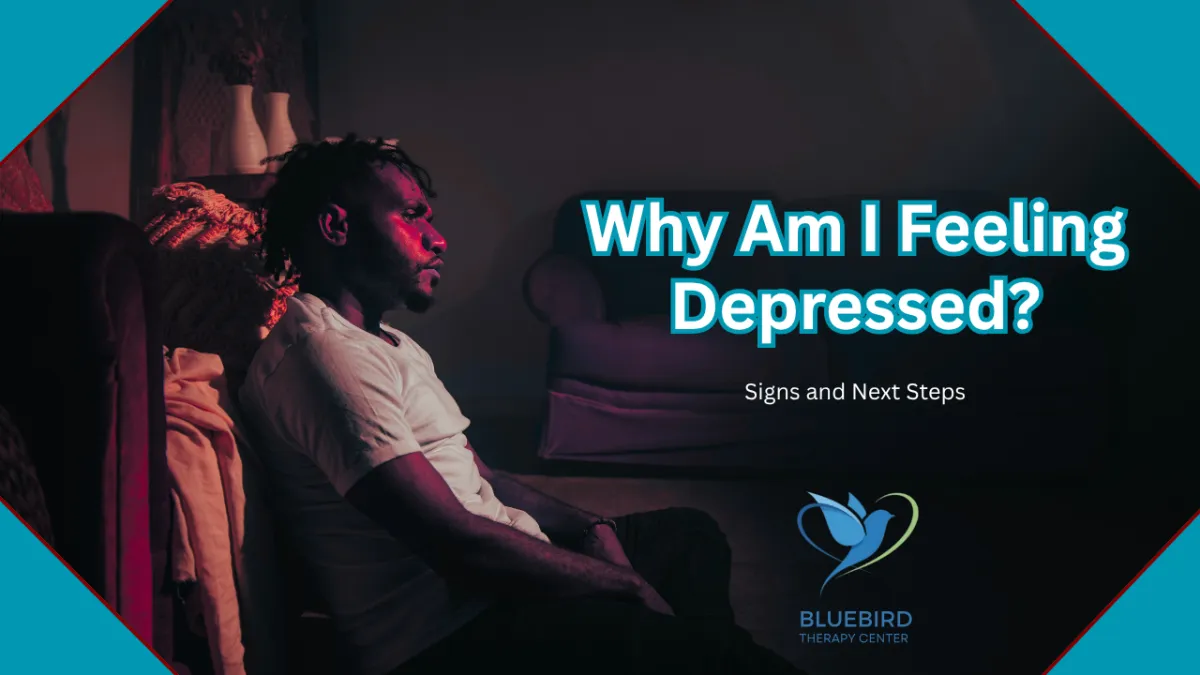
Why Am I Feeling Depressed? Signs and Next Steps New Jersey
Why Am I Feeling Depressed? Understanding the Signs
What to Do Next
You are not in a crisis. Nothing catastrophic has happened. Life, by most measures, is fine. And yet you wake up every morning with a heaviness that you cannot shake. Things that used to matter do not feel like they matter anymore. You are going through the motions, showing up where you need to show up, but something is off and you cannot quite name it.
So you find yourself asking the question a lot of people ask but not enough people talk about out loud.
Why am I feeling depressed?
It is a good question. And the fact that you are asking it means you are paying attention to something real. At Bluebird Therapy Center in Bergen County, New Jersey, we hear this question often. Here is what you need to understand.
Depression Does Not Always Look Like What You Expect
Most people picture depression as someone who cannot get out of bed, crying every day, visibly falling apart. And sometimes it does look like that. But more often, depression is quieter and harder to recognize, especially in yourself.
Here are some of the ways depression actually shows up in everyday life:
Persistent low mood that lingers for weeks without a clear cause
Loss of interest in things you used to enjoy, hobbies, socializing, work you once cared about
Fatigue that sleep does not fix
Difficulty concentrating, making decisions, or remembering things
Feeling emotionally flat or disconnected from the people around you
Increased irritability or a short fuse that feels out of character
Changes in appetite, eating significantly more or significantly less
A quiet but persistent sense that things are not going to get better
You might read that list and recognize yourself in two or three of those points. You might recognize yourself in all of them. Either way, it is worth taking seriously.
Why Depression Does Not Always Have an Obvious Cause
One of the reasons people dismiss what they are feeling is because they cannot point to a reason for it. Nothing bad happened. There is no single event to blame. And so they tell themselves they have no right to feel this way.
Depression does not require a reason. It is not always triggered by a specific loss or trauma. It can develop gradually from accumulated stress, burnout, isolation, major life transitions, hormonal changes, disrupted sleep, or simply a combination of factors that built up over time without anyone noticing.
Spring can actually bring its own version of this. While most people associate seasonal mood changes with winter, the shift into spring can trigger or intensify depression in some people, particularly those dealing with grief, life dissatisfaction, or the pressure of feeling like everyone else seems energized and happy while they are still struggling.
The Difference Between Sadness and Depression
Sadness is a normal human emotion. It comes in response to specific situations and it passes. Depression is different. It is persistent, it affects multiple areas of your life at once, and it does not lift the way ordinary sadness does.
A few key differences:
Sadness tends to be connected to a specific situation, fades over time, and does not prevent you from functioning.
Depression lingers regardless of circumstances, affects your energy, motivation, relationships, and ability to enjoy life, and tends to get heavier without intervention.
If what you are feeling has been present for two weeks or more and is affecting how you function day to day, that is depression, not a rough patch. And it deserves real attention.
What to Do When You Think You Might Be Depressed
The most important thing is to not wait and hope it resolves on its own. Depression is highly treatable, but it rarely improves without some form of active support.
Here are concrete next steps:
1. Name what you are feeling. Stop minimizing it. Telling yourself you are just tired or just stressed delays the help you actually need.
2. Talk to someone you trust. Not to fix it, but to stop carrying it alone. Social isolation feeds depression. Connection interrupts it.
3. Take care of your basic physical needs. Sleep, movement, and nutrition have a direct impact on mood. None of these are cures, but neglecting them makes everything harder.
4. Reach out to a therapist. This is the most direct path to understanding what is driving your depression and building a real plan to address it.
Bluebird Therapy Center offers virtual therapy sessions for anyone across New Jersey. You do not have to come into an office, rearrange your schedule, or figure out how to make it work logistically. You just have to reach out.
We accept most major insurance plans and offer a free 15-minute consultation so you can take that first step without any pressure or commitment.
Book your free consultation today and stop waiting for it to get better on its own.
You Are Not Broken. You Need Support.
Depression has a way of convincing you that this is just who you are now. It is not. It is something that is happening to you, and it is something that can get better with the right support.
If you are anywhere in New Jersey and you have been carrying this quiet heaviness around longer than you should have, reach out to Bluebird Therapy Center in New Jersey. We are here, and we know how to help.


