


How does my Mind and Food Connect? | Bluebird Therapy Center NJ
The Mind-Food Connection: How What You Eat Shapes Your Mental Health
Most people know that eating well is good for their body. Fewer realize it plays just as big a role in how they think, feel, and cope with daily stress. The connection between nutrition and mental health is real, well-researched, and consistently underestimated in conversations about anxiety, depression, and emotional balance.
At Bluebird Therapy Center, we believe mental wellness is a whole-person issue. What happens on your plate genuinely matters to what happens in your head.
Your Brain Is an Organ That Needs the Right Fuel
The brain consumes roughly 20% of your body's total energy, making it one of the most nutrient-hungry organs you have. It runs on glucose, yes, but also on amino acids, fatty acids, vitamins, and minerals that come directly from the food you eat every day.
When your diet lacks key nutrients or stays inconsistent, brain function takes the hit first. You feel foggy, irritable, anxious, or flat. And because the symptoms are mental rather than physical, most people never connect them back to food.
That connection starts deep in the gut.
The Gut-Brain Connection
Scientists now refer to the gut as the "second brain." Your gastrointestinal system contains hundreds of millions of nerve cells and produces a significant portion of the body's serotonin, the neurotransmitter most closely tied to mood regulation, sleep, and appetite.
What you eat directly influences your gut microbiome, and the health of your gut microbiome directly influences your mood. A diet heavy in processed foods and sugar disrupts this system. A diet rich in whole, fiber-dense, and fermented foods supports and strengthens it.
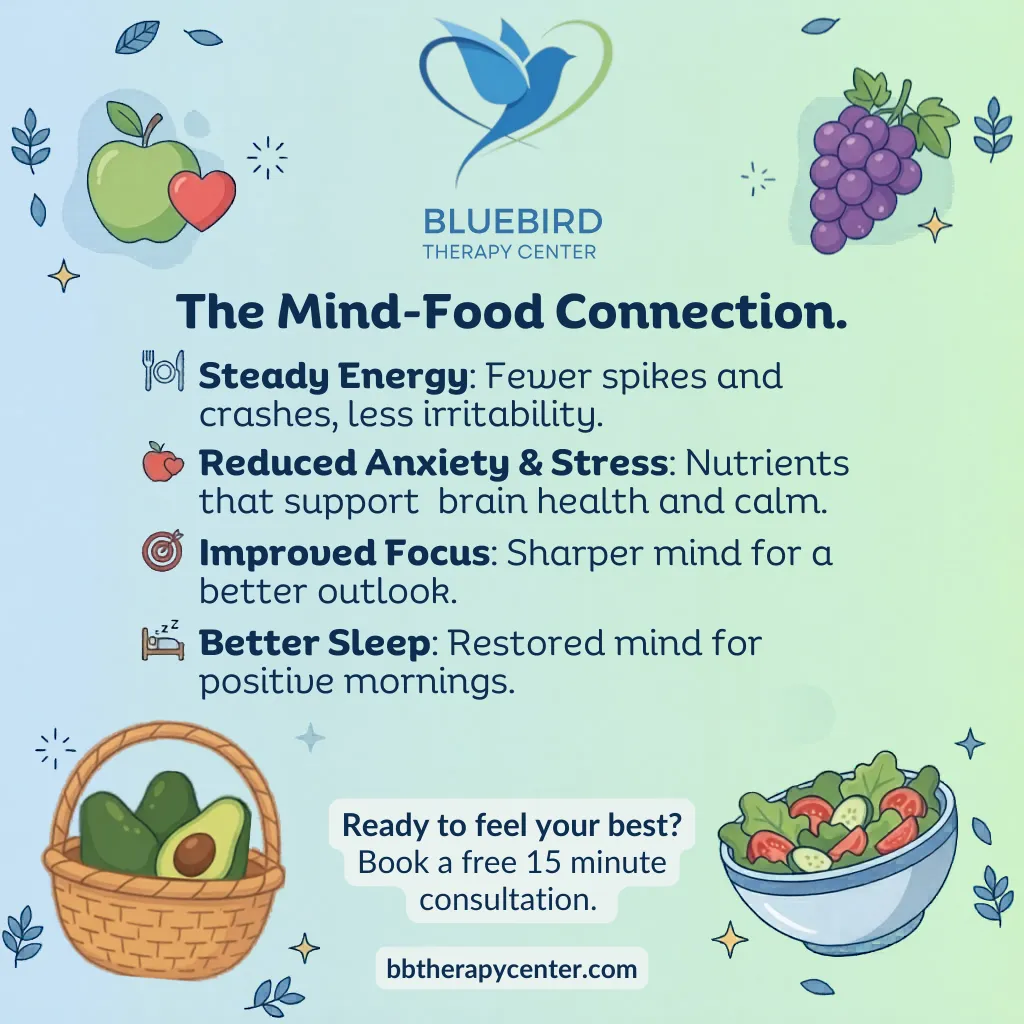
4 Ways Food Affects Your Mental Health
1. Steady Energy, Fewer Mood Swings
Blood sugar spikes and crashes are among the most common and least talked about triggers for irritability and low mood. When you eat refined carbohydrates or sugary foods, blood sugar shoots up and then crashes hard.
That crash triggers cortisol, your primary stress hormone, which can leave you feeling tense, agitated, or emotionally raw. Balanced meals with protein, fiber, and healthy fats keep blood sugar stable and mood far more even throughout the day.
2. Reduced Anxiety and Stress
Several nutrients have a direct calming effect on the nervous system. Magnesium, found in leafy greens, nuts, and seeds, helps regulate the body's stress response. Omega-3 fatty acids, found in fatty fish, walnuts, and flaxseed, reduce brain inflammation and are consistently linked to lower levels of anxiety and depression.
B vitamins, particularly B6, B9 (folate), and B12, are essential for producing neurotransmitters like serotonin and dopamine. Low levels of these vitamins are closely tied to increased anxiety and depressive symptoms.
3. Sharper Focus and Mental Clarity
Brain fog is often a nutrition problem. Dehydration, low iron, skipped meals, and high sugar intake are among the most common causes. A diet built around whole foods, vegetables, legumes, quality protein, and complex carbs gives your brain the steady fuel it needs to stay sharp and focused.
For many people, this shift alone produces a noticeable improvement in daily quality of life.
4. Better Sleep, Better Mornings
Poor sleep and poor mental health reinforce each other in a cycle that is hard to break. What you eat in the evening plays a larger role in sleep quality than most people expect. Foods high in tryptophan, including turkey, eggs, dairy, and bananas, support melatonin production. Heavy, processed, or high-sugar meals close to bedtime tend to do the opposite.
Better sleep means a more resilient nervous system, more regulated mood, and greater capacity to handle stress the next day.
Foods That Support Mental Wellness
Fatty fish (salmon, sardines, mackerel): rich in mood-supporting omega-3s
Leafy greens (spinach, kale): high in folate and magnesium
Berries: antioxidant-rich and anti-inflammatory
Fermented foods (yogurt, kefir, kimchi): support a healthy gut microbiome
Nuts and seeds: excellent sources of healthy fats, magnesium, and zinc
Whole grains: provide steady energy and support serotonin production
Eggs: packed with B vitamins, choline, and tryptophan
Foods That Work Against Your Mood
Ultra-processed snacks and fast food
High-sugar drinks and energy drinks
Excessive alcohol
Refined white flour products eaten without protein or fat
Trans fats found in packaged baked goods
These foods trigger inflammation, disrupt gut bacteria, spike and crash blood sugar, and impair the brain's ability to regulate emotion over time.
Nutrition Is One Piece of a Bigger Picture
Changing what you eat can make a meaningful difference in how you feel day to day. But for many people dealing with persistent anxiety, depression, or emotional dysregulation, food is one piece of a larger puzzle.
Mental health therapy gives you the tools to understand your patterns, work through what is driving your symptoms, and build sustainable habits including healthier ones around nutrition and self-care.
At Bluebird Therapy Center, located in Bergen County, New Jersey, our therapists work with adults and teens navigating anxiety, depression, stress, and life transitions. We take a whole-person approach because that is the only kind that produces real, lasting change.
If you are ready to start feeling better, not just physically but mentally, visit Bluebird Therapy Center or book your free 15-minute consultation today. One step is all it takes.


