


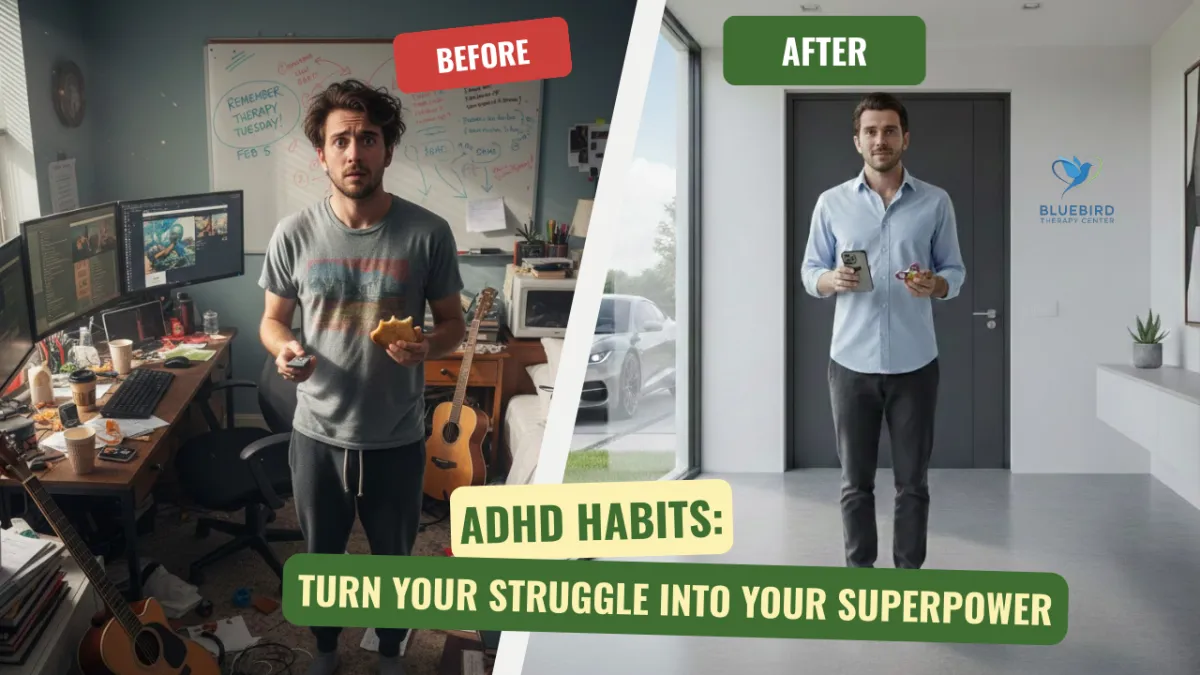
ADHD Habits: Turn Your Struggle Into Superpowers
ADHD Habits: Turn Your Struggle Into Your Superpower
If you have ADHD, you've probably heard it a thousand times: "Just build better habits." As if it's that simple. As if your brain works like everyone else's.
The thing is, it doesn't. And that's not a flaw. It's actually the setup for something incredible.
Living with ADHD means your executive function works differently. Starting habits feels like pushing a boulder uphill. The same ADHD brain that struggles to build routines also has an advantage called hyperfocus. The trick is learning how to work with your neurology instead of against it.
Understanding ADHD and Executive Dysfunction
Let's be honest about the struggle first. Executive dysfunction, the difficulty with planning, organizing, and initiating tasks, is real. It's not laziness. It's not lack of willpower. Your prefrontal cortex is wired differently, which makes habit formation genuinely harder than it is for neurotypical individuals.
When you try to build a habit the traditional way say, doing 10 minutes of meditation every morning, your ADHD brain might experience this as:
Starting feels impossible without external pressure or novelty
Boredom sets in quickly (especially if the activity isn't stimulating enough)
Time blindness makes you lose track or forget entirely
Decision fatigue depletes you before you even begin
This isn't a character flaw. This is neurology. And recognizing this difference is where real change begins.
The ADHD Superpower: Hyperfocus
Now, flip the script. That same ADHD brain that struggles with boring routines? It can enter states of hyperfocus where you become completely absorbed in activities that genuinely interest you. Hours pass like minutes. You lose track of everything except what's in front of you.
This isn't a bug. It's a feature.
The challenge is harnessing hyperfocus intentionally. People with ADHD often stumble into hyperfocus by accident, usually on things that don't serve them (hello, social media rabbit holes). But what if you could deliberately channel that neurological gift into habits that actually improve your mental health and life?
Research on ADHD shows that when tasks align with personal interests or have built-in novelty and stimulation, people with ADHD not only stick with habits, they often outperform their neurotypical peers.
Building ADHD-Friendly Habits: The Reality
1. Make it interesting. Boring habits die. Find the angle that makes your brain light up. If you hate running on a treadmill, try rock climbing or dancing. Same goal (movement for mental health), completely different execution.
2. Use external structure. Your ADHD brain needs scaffolding. This might look like phone alarms, accountability partners, habit-tracking apps, or visual checklists. These aren't crutches, they're tools that work with how your brain is wired.
3. Start ridiculously small. While neurotypical people might build a habit by committing to 30 minutes daily, your ADHD brain might thrive with 5 minutes. Consistency matters more than duration. A 5-minute journaling session you actually do beats a 30-minute plan you abandon.
4. Leverage hyperfocus strategically. When you notice yourself hyperfocusing on something, ask: "How can I channel this into a positive habit?" If you're hyperfocusing on a particular hobby or interest, build your mental health routine around it.
5. Expect and plan for the extinction burst. ADHD brains crave novelty. After a few weeks, a habit might suddenly feel unbearably boring. This is normal. Plan ahead: rotate activities, add variations, or temporarily shift your focus before coming back.
How the Habit Builder Tool Helps ADHD Brains
This is where having the right support system matters:
Break habits into smaller, manageable steps (perfect for executive dysfunction)
Track patterns in what actually holds your attention (to identify your hyperfocus triggers)
Build in flexibility and novelty to prevent boredom
Create visual progress markers that provide dopamine rewards
Bluebird Therapy Center's free habit-building tool is designed with neurology in mind. Instead of forcing you into a one-size-fits-all approach, it helps you build a system that actually matches how your brain operates.
Real Talk: When to Get Professional Support
Understanding your ADHD is one part. Actually rewiring your habits is another. A therapist in Bergen County who specializes in ADHD can help you:
Identify your specific executive dysfunction patterns
Discover what genuinely activates your hyperfocus
Build a personalized system that works for your brain
Address the shame and frustration that often comes with ADHD
You don't have to figure this out alone. Book a consultation with Bluebird Therapy Center and let's talk about turning your ADHD into the advantage it actually is.
The Quote That Captures It All
As Aristotle noted, "Moral excellence comes about as a result of habit. We become just by doing just acts, temperate by doing temperate acts, brave by doing brave acts." For ADHD brains, this means building habits that honor how you're actually wired—not how you wish you were wired.
Your ADHD Brain Is Not Broken
Yes, building habits with ADHD is harder. Your executive function works differently. Your dopamine regulation is different. Your relationship with time is different.
But your ability to hyperfocus, your creativity, your resilience in navigating a world not built for you—these are strengths. The goal isn't to force yourself into neurotypical habit patterns. The goal is to build routines that work with your neurology.
Start small. Build in novelty. Use tools and systems. And if you're stuck, reach out. Therapists at Bluebird Therapy Center in New Jersey understand ADHD. We know your struggle isn't a character flaw. And we know how to help you harness your hidden superpowers.


